
Romney, West Virginia: The Story Behind the State's Oldest Town |
Discover the fascinating history of Romney, West Virginia's oldest town. From its founding in 1762 to its role in the state's early development, explore what makes this historic community special. |
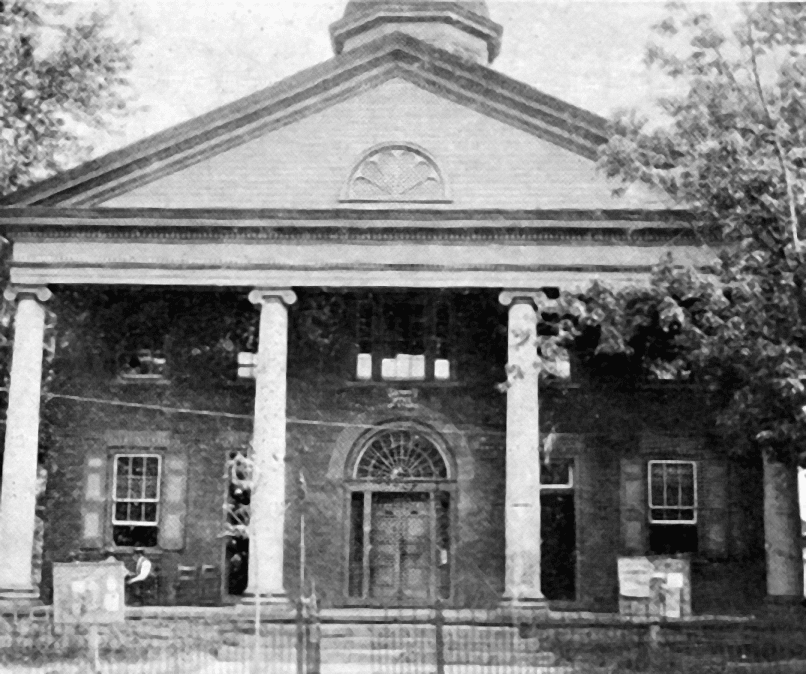
The old Hampshire County Courthouse above, was built in 1833 |
Romney stands as a living testament to West Virginia's frontier spirit. As the oldest town in the state, this Hampshire County community carries stories that stretch back nearly 300 years, from its earliest settlement by hunters and traders to its role in shaping the region's identity.
The Early Settlement Years
Long before Romney became an official town, the area attracted hunters and traders who recognized the value of its location along the South Branch Potomac River. Around 1725, these early pioneers began establishing camps in what would become one of the most historically significant settlements in the region.
In 1738, brothers John and Job Pearsall took the first steps toward permanent settlement by building homes in the area. Their presence marked the beginning of what locals would come to know as Pearsall's Flats. The brothers understood something that would define the community for centuries to come: this land, nestled in the Potomac Highlands, offered both opportunity and challenge in equal measure.
The growing settlement faced constant threats from Native American raids during the French and Indian War. In response, the Pearsall brothers constructed Fort Pearsall in 1758, providing protection for the approximately 100 people who had made the area their home. George Washington himself provisioned and garrisoned the fort at various times until 1758, adding another layer of historical significance to the site.
A Town Takes Shape: The Fairfax Connection
The transformation from frontier outpost to organized town came through an unlikely source: Thomas Fairfax, the 6th Lord Fairfax of Cameron. As the owner of the Royal Grant to the Northern Neck estate, which included all of present-day West Virginia's Eastern Panhandle, Fairfax saw potential in the growing settlement.
In 1748, Lord Fairfax sent a surveying party to map his lands along the Potomac and South Branch Potomac rivers. Among the surveyors was a 16-year-old George Washington, who would spend three summers surveying the vast estate. While local oral traditions claimed Washington laid out Romney into lots, written records indicate that James Genn, another Fairfax employee, actually performed the town's initial survey.
By 1762, with hostilities from the French and Indian War subsiding, Lord Fairfax recognized the opportunity to formalize the settlement. He sent surveyors to lay out the town into 100 lots and renamed it Romney, honoring the Cinque Ports city on the English Channel in Kent, England. This act officially established Romney as West Virginia's oldest town.
Hampshire County: The State's First County
Romney's significance extends beyond its age. The town serves as the county seat of Hampshire County, which holds its own historic distinction as West Virginia's oldest county. The Virginia General Assembly authorized the county's creation in 1754, carving it from parts of Frederick and Augusta Counties in Virginia.
However, actual organization of the county was delayed until 1757 due to the ongoing French and Indian War. The first meeting of the Hampshire County Court took place at Fort Pleasant, now known as Old Fields in present-day Hardy County. By that time, the county's population had dwindled dramatically as settlers fled in fear of Native American attacks.
The few families who remained clustered near Fort Pearsall in Romney and Fort Edwards at present-day Capon Bridge. These resilient settlers, protected by the region's forts, laid the groundwork for the community's eventual resurgence.
Growth and Resilience
The Battle of Point Pleasant in 1774 marked a turning point for the region. With Native American resistance defeated, settlers returned to Hampshire County in greater numbers. The end of the American Revolution brought additional changes, as the Virginia Legislature nullified Lord Fairfax's English grant to the region.
The legislature provided fee simple grants to settlers who had existing contracts with Lord Fairfax and opened remaining lands as public domain. This policy spurred rapid growth. By 1790, Hampshire County's population reached 7,346 residents, making it the second most populous county in what would become West Virginia.
During the Whiskey Rebellion of 1794, Hampshire County men demonstrated their commitment to the young nation by volunteering to serve under Major General Daniel Morgan. Approximately 1,200 of the 12,950 men in Morgan's command came from the area that would later become West Virginia, with many likely volunteering at Moorefield in Hardy County.
Faith and Community
The spiritual life of early Romney reflected the diverse backgrounds of its settlers. German Baptist Brethren, also known as Dunkers, brought their pacifist traditions to the Cacapon area, often befriending local Native Americans in the frontier environment.
In 1775, Baptist missionaries organized the first European church in the county among a group of Cacapon settlers. The Methodist Episcopal Church began its work in 1771, eventually leading to the formation of the Methodist Episcopal Church, South. The Protestant Episcopal Church had established Hampshire County as a parish in 1753, and from 1772 until his death in 1777, Reverend Nathaniel Manning served the community from the Glebe near present-day Moorefield.
By 1792, Romney had its own Presbyterian church, while Mount Bethel Church at Three Churches served another congregation in the county. These early religious institutions helped sustain the faith of European inhabitants and build the social fabric of the emerging community.
Why Romney's History Matters Today
Understanding Romney's past provides valuable context for appreciating the town's present character. The wide lowlands that attracted early farmers continue to support agriculture, while the rolling uplands still offer pasturage for livestock. The streams that provided fish for early settlers still flow through the county, and the mountains that supplied timber and stone for pioneer homes remain a defining feature of the landscape.
Romney's history is not merely a collection of dates and names. It represents the story of resilience, adaptation, and community building that defined the American frontier experience. From the Pearsall brothers' initial settlement through Lord Fairfax's vision and the challenges of war and westward expansion, Romney emerged as a testament to the enduring spirit of its residents.
Today, as West Virginia's oldest town, Romney invites residents and visitors alike to explore its rich heritage. The streets laid out in 1762 still guide foot traffic through the historic downtown. The stories of Fort Pearsall, George Washington's surveys, and the early settlers who built the community continue to shape how Romney sees itself and its place in the broader story of West Virginia.
For those who call Romney home, this history is not just something to be read about in books. It is a living legacy that connects the present to the past, reminding everyone who walks its streets that they are part of a story that began nearly three centuries ago and continues to unfold today. |
0 Comments
Join the conversation
Be the first to comment
Share your thoughts above.